Considering the ageing population, there is a risk that the beekeeping culture and expertise may not be passed on to the next generation.
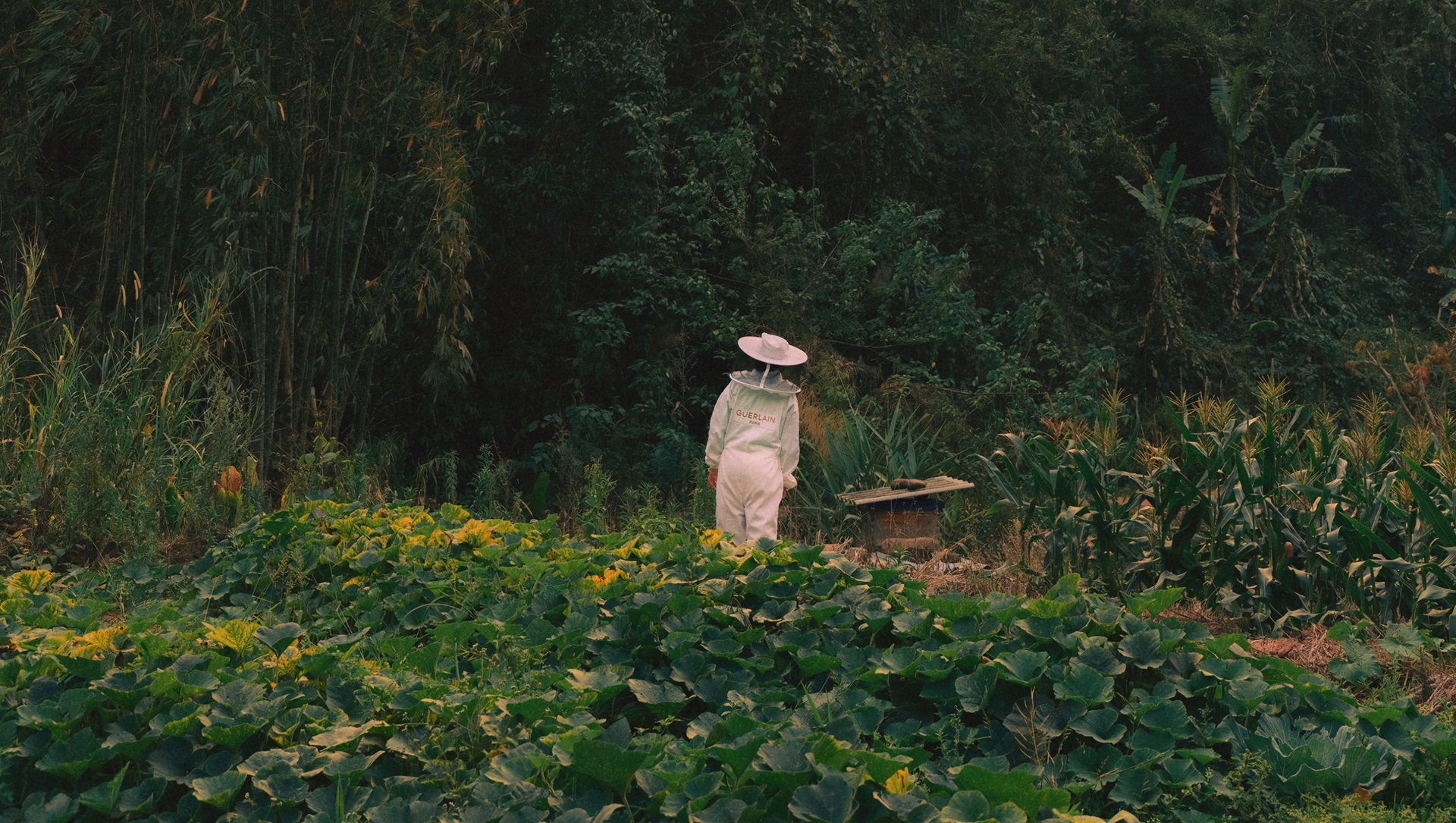
Women for bees
Assisting women in preserving living natureLocal partnerships around the world
Initially launched in partnership with UNESCO, the Women for Bees programme began in southern France before expanding to biosphere reserves in Cambodia, and then Rwanda, where 33 women beekeepers were trained in 2024. In total, nearly 200 women have been trained, and more than 3,500 hives have been installed.
Alongside its partnership with UNESCO, Guerlain is also developing a series of Women for Bees initiatives with leading local NGOs, in particular:
- Guerlain x Conapi in Bologna, Italy
- Guerlain x El Rincón de la Abeja in Barcelona, Spain
- Guerlain x Umeda Mitsubachi NPO and Ginza Mitsubachi NPO in Japan
![[object Object]](/images/articles/women-for-bees/women-for-bees-1-video.jpg)
Women
for bees


Spain
With NGO El Rincón de la Abeja, in Barcelona in 2022 and 2023

France
In southern France in 2021

Japan
Avec les associations à but non lucratif Umeda Mitsubachi à Osaka et Ginza Mitsubachi à Tokyo


Italie
Avec la coopérative Conapi, en Émilie-Romagneet en Calabre en 2022 et 2023

Rwanda
Avec la Réserve de biosphère de Gishwati-Mukura Landscape en 2023
Cambodia
Avec la Fondation Maddox Jolie-Pitt (MJP) à Battambangen 2022

Women
for bees


Spain
With NGO El Rincón de la Abeja, in Barcelona in 2022 and 2023
France
In southern France in 2021
Japan
Avec les associations à but non lucratif Umeda Mitsubachi à Osaka et Ginza Mitsubachi à Tokyo
Italie
Avec la coopérative Conapi, en Émilie-Romagneet en Calabre en 2022 et 2023
Rwanda
Avec la Réserve de biosphère de Gishwati-Mukura Landscape en 2023
Cambodia
Avec la Fondation Maddox Jolie-Pitt (MJP) à Battambangen 2022
The example of Japan
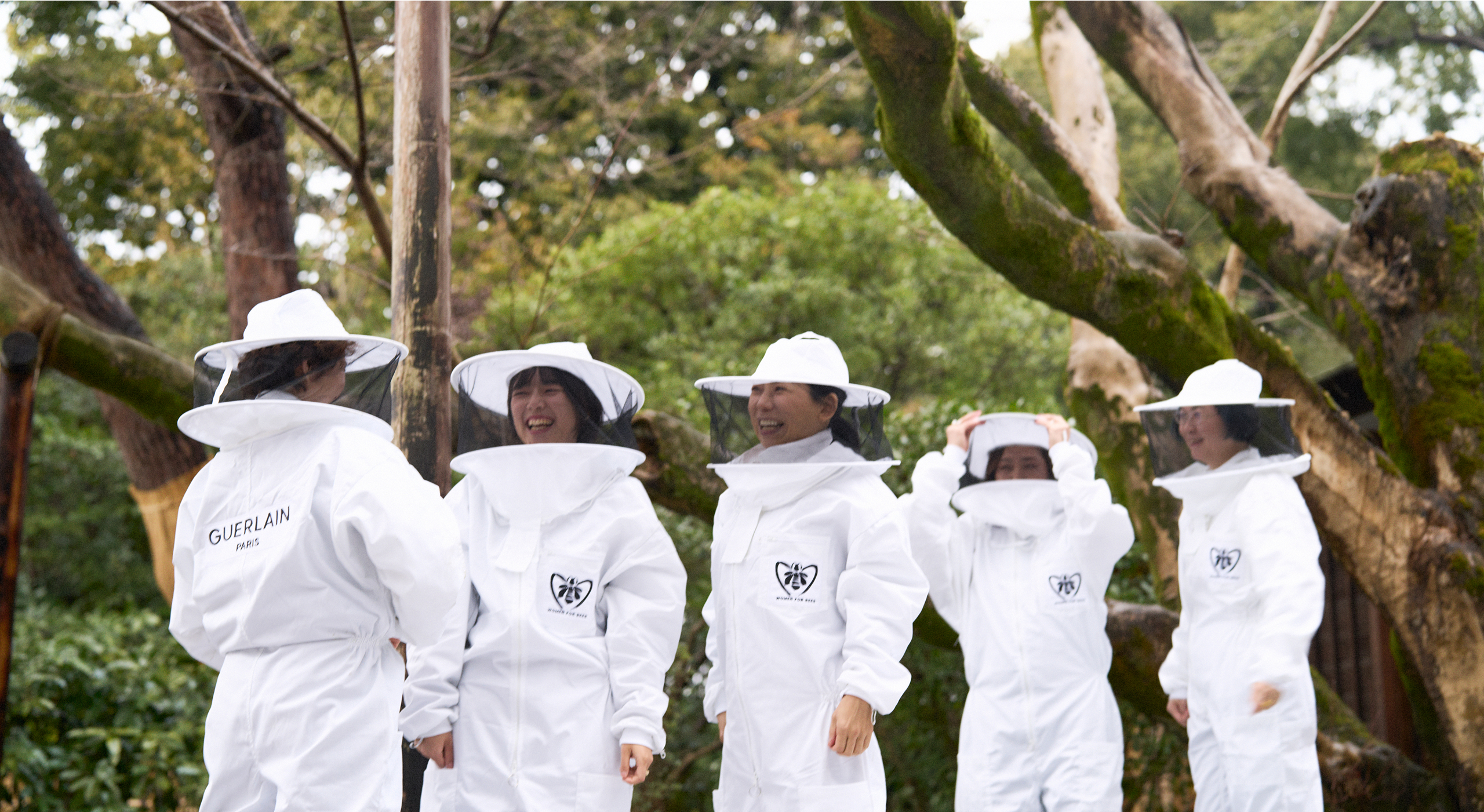
In 2024, Guerlain strengthened its commitment in Japan by meeting with the 50 women beekeepers who graduated in 2022 and 2023 in Tokyo and Osaka, alongside Mirei Kiritani, Guerlain ambassador in Japan.
Thanks to the support of local partners Ginza Mitsubachi Project in Tokyo and Umeda Mitsubachi Project in Osaka, the Women for Bees programme in Japan offers a concrete and innovative approach to empowering women in beekeeping, a field traditionally closed to them and dominated by men in the country.
![[object Object]](/images/articles/women-for-bees/women-for-bees-3.jpg)
The risk of ageing
Women, along with younger generations, play a crucial role in preserving this savoir-faire and developing new practices for the years to come.
Decline in the numbers of farmers
Similarly, the deline in the number of farmers threathens agricultural operations.
Fewer farms mean fewer plants providing the essentiel nectar for pollinating bees.
Education and awareness of good practices are key levers for the protection of biodiversity nationwide, including in urban areas.
The danger of pesticides
To increase productivity per plot despite the decreasing number of farms, and to enhance the value of agricultural products, farmers often resort to use of pesticides
This is a harmful practice for bee survival that we are committed to combating.